
Education
The GEM team provides students and practicing medical professionals from around the globe with opportunities to advance knowledge and gain experience and skills to provide high-quality emergency care in diverse settings. We partner with hospitals, academic institutions, and ministries of health to design and deliver training programs that build the skills, confidence, and leadership capacity of emergency care providers. Our team develops postgraduate training pathways, simulation-based learning, and short courses that are tailored to the needs and realities of diverse health systems, ensuring that providers gain hands-on, practical experience in managing trauma, critical illness, and acute emergencies.
We prioritize approaches that are accessible and sustainable. This includes co-creating curricula with local faculty, mentoring emerging educators, and developing innovative, context-appropriate tools such as low-cost clinical simulators for procedure training. Our partnerships, including the long-standing MEM program in India, equip clinicians with advanced clinical and leadership skills while strengthening the teaching capacity of local institutions.
Through this work, we are cultivating the next generation of emergency medicine leaders and expanding equitable access to high-quality training opportunities. By investing in people and empowering local educators, our education initiatives help build strong emergency care systems that improve patient outcomes today and shape the future of emergency medicine worldwide.
__________________________________________________________________________________________________________________________________
Low-cost Lumbar Puncture Simulators for Pediatric Neurological Emergency Training
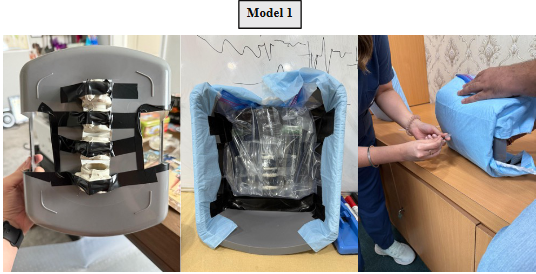
In collaboration with partners in India, our Global Emergency Medicine team contributed to the development and evaluation of low-cost lumbar puncture simulators for pediatric neurological emergency training. By adapting locally available materials into realistic, portable training models, the project expanded access to essential procedural education in resource-limited settings. Post-training evaluations demonstrated a significant increase in trainee confidence and competency, with 99% of participants reporting improved skills after the workshop. This initiative demonstrates the team’s commitment to innovative, context-appropriate teaching solutions that strengthen clinical capacity and advance equitable emergency medicine education globally. See full article here.
Escape Room — Integrating Procedure Teaching for Emergency Medicine Trainees in India
Through the MEM program, we described an educational innovation that uses an escape room and simulation to teach Emergency Medicine trainees in India about the management of Human Immunodeficiency Virus (HIV) complications. This activity was specifically designed to be low-cost and adaptable to the significant resource variability found across different hospitals participating in the Masters in Emergency Medicine program. The escape room utilizes a clinical scenario involving chest pain and altered mental status in an HIV patient, requiring trainees to solve puzzles based on learning objectives and ultimately perform a pericardiocentesis using a readily available, low-fidelity model. Post-activity surveys revealed that the format was highly effective in reviewing medical knowledge and was well-received by the forty-seven participating trainees. This successful model offers a replicable and scalable method for procedural and content-specific medical education in resource-variable settings. Read more here.
